
Why Classical Arrangements Help Beginners Learn Faster: A Teacher’s Guide
Many piano students dream of playing famous classical pieces long before they have the foundation to approach the originals. As teachers, we feel that tension: we want to nurture their excitement, but we also know full versions of Moonlight Sonata, Clair de Lune, or Rondo Alla Turca are far beyond beginner reach.
This is where classical arrangements become not just helpful, but transformational.
Thoughtfully arranged classical music gives students early access to the repertoire they love while strengthening technique, musicality, rhythm, and reading. When used strategically, arrangements become one of the most effective tools for building confidence and long-term motivation in both children and adult beginners.
This guide explains why classical arrangements accelerate progress, what to look for when choosing them, and how to introduce them in a way that supports healthy musicianship.
Why Classical Arrangements Work So Well for Beginners
1. They Match Musical Excitement With Appropriate Difficulty
Students often “fall in love” with pieces long before they are ready to tackle the full textures. Good arrangements honor that excitement while presenting:
simplified patterns
accessible hand positions
reduced leaps
manageable rhythms
single-voiced textures
The musical reward stays intact — without the overwhelm.
2. They Teach Real Classical Style Without the Frustration
Unlike pop arrangements, classical pieces have clear patterns, harmonic structures, and voice-leading rules. Arrangements allow teachers to introduce:
predictable phrase shapes
cadences
harmonic progressions
expressive timing
classical articulation
…all within a level students can handle.
3. They Expand Reading Skills Beyond Method Books
Most method music stays tightly patterned to reinforce concepts. Classical arrangements widen that world by introducing:
wider intervals
richer harmonies
multi-measure patterns
phrase-based reading
more flexible rhythms
Students become adaptable readers rather than method-dependent readers.
4. They Build Long-Term Motivation
Playing music they recognize is one of the strongest motivators for practice consistency. Teachers routinely report:
longer independent practice
more repeat playthroughs
higher engagement
stronger emotional connection to piano
Classical arrangements turn “assignment pieces” into “pieces I can’t stop playing.”
What Makes a High-Quality Classical Arrangement?
Not all arrangements are created equal. Many online versions oversimplify to the point that musical integrity is lost, while others remain too dense for real beginners.
Look for arrangements that:
1. Preserve the Musical Character
A good adaptation keeps:
the original melody
recognizable harmonic motion
essential rhythmic gestures
the overall mood
Even in a simplified form, the piece should “feel” like the original.
2. Use Reduced Yet Musical Left-Hand Textures
Beginners struggle most with left-hand patterns. Effective arrangements:
simplify LH to single notes or open intervals
rely on registral clarity
avoid hand-crossing
remove excessive leaps
The LH should support, not sabotage.
3. Keep Pedagogical Flow
This means placing a piece at the right level and avoiding “gotchas” like:
hidden octave shifts
sudden hand leaps
unexpected accidentals
complex tuplets
awkward fingering traps
A good arrangement strengthens skills rather than creating unnecessary hurdles.
4. Reflect Professional Engraving Standards
Accurate engraving matters, especially for newer readers. Look for:
clean notation
logical spacing
consistent fingering
phrasing marks where needed
clear dynamic placement
Readable scores = confident students.
When to Introduce Classical Arrangements in Lessons
Most teachers find the sweet spot is:
late beginner through early intermediate
when students can read steps, skips, and basic intervals reliably
after they’ve developed some independence in both hands
Introducing arrangements too early creates dependency on rote learning. Introducing them too late misses their motivational power.
How Classical Arrangements Accelerate Specific Skills
1. Rhythm Accuracy
Students encounter:
dotted rhythms
ties across barlines
syncopation
compound meter
These appear in manageable contexts that allow students to internalize new patterns.
2. Harmonic Awareness
Even simplified textures help students hear:
tonic/dominant relationships
arpeggiated harmonies
cadential patterns
classical chord progressions
This develops musical intelligence that transfers beautifully to improvisation and theory.
3. Voicing and Melodic Balance
Students learn to:
bring out a melody
soften accompaniment
shape expressive lines
These skills normally require much harder repertoire.
4. Dynamic Phrasing
Arrangements let beginners experience:
crescendos
diminuendos
expressive shaping
phrase-based dynamics
Students start to “sound like real pianists” earlier.
How to Use Classical Arrangements in Your Studio
Here are powerful ways to integrate them:
1. Anchor a Recital Program
Arrangements make recital preparation joyful, not stressful.
2. Use Them for Technique Breakthroughs
Pieces with simplified textures allow you to isolate:
wrist flexibility
forearm rotation
pedaling basics
slur-to-staccato contrasts
3. Connect With Hobbyists and Adults
Adults especially love playing music they recognize. Give them early wins.
4. Reinforce Concepts Between Method Levels
Method pieces can feel narrow. Arrangements broaden musical experiences without jumping ahead too quickly.
Recommended Starting Points
Beethoven’s Moonlight Sonata (First Movement) — stunning, simple texture, gorgeous phrasing
Mozart’s Rondo Alla Turca — rhythmic clarity, classical articulation
Chopin’s Nocturne Op.9 No.2 — melodic shaping + LH consistency
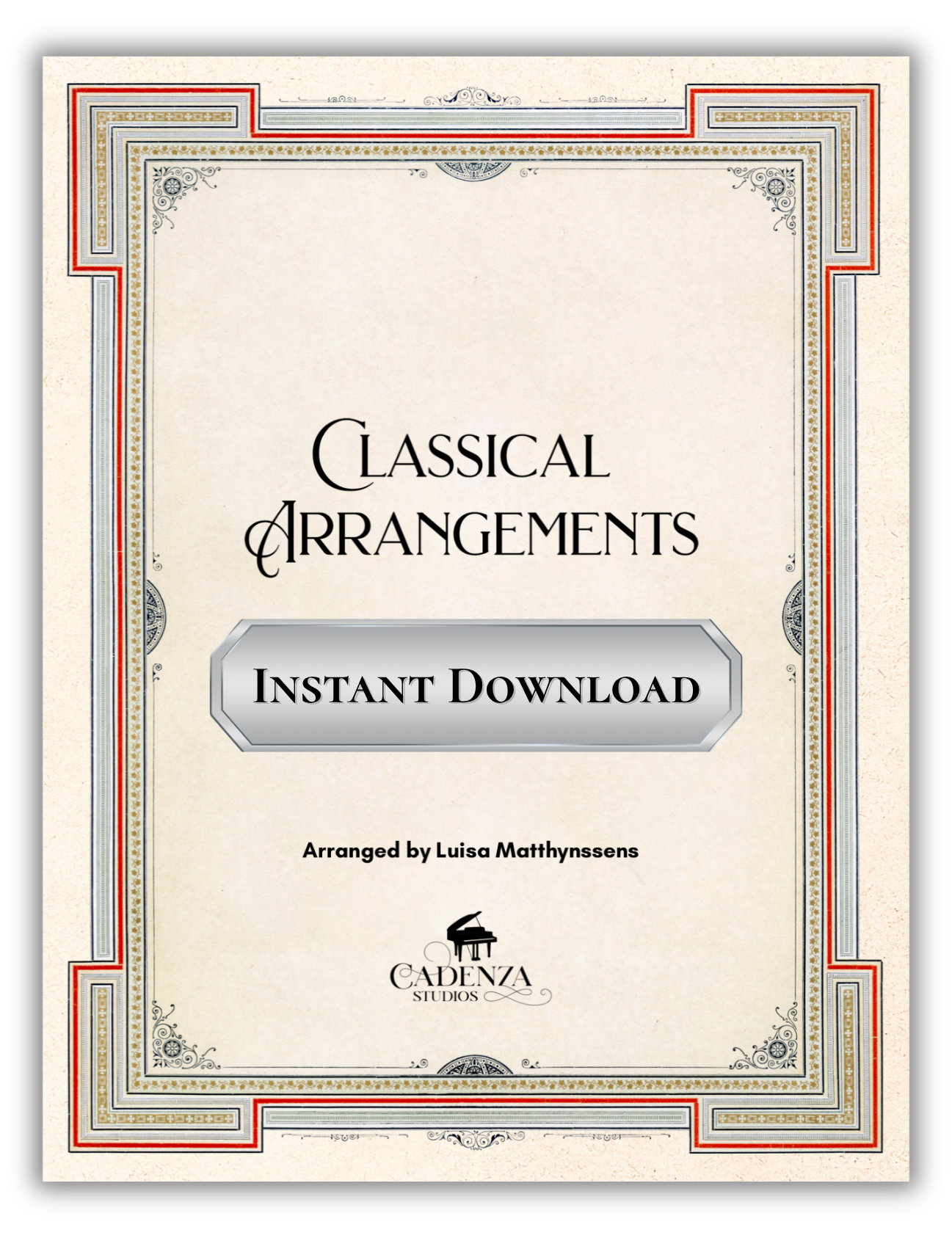
Find these pieces and more in Classical Arrangements - 30 Arrangements of the World’s Most Beloved Classical Pieces
Mid-Elementary to Early-Intermediate
When students fall in love with Beethoven, Debussy, and Chopin long before they’re ready for the originals, they’re usually told they have to wait years to play the music they love.
This collection of 30 thoughtfully crafted arrangements captures the character of the great classics while making them accessible to developing pianists. Students can explore the sound, style, and beauty of these pieces much earlier in their journey.
🖥️ Instant PDF download. No physical book will be shipped.
→ Want a physical copy? Get the paperback.
Final Thoughts
Classical arrangements are not just “simplified pieces.” They are strategic teaching tools that enrich reading, technique, and musicality — all while honoring the repertoire students love most.
When chosen carefully, they help beginners learn faster, read more confidently, and enjoy more meaningful progress at the piano.