
Piano Assignment Sheets: How to Write Assignments Students Actually Follow
A good assignment sheet is the bridge between a lesson and a week of practice. Students forget most of what happened in a lesson by the next morning, and parents weren't in the room to hear it. What's written down is what gets practiced.
Here's what to include on a piano assignment sheet, how to write assignments students can follow on their own, and a printable option that keeps everything in one place.
What to Include on a Piano Assignment Sheet
The date and lesson number. It makes it easy to look back and see progress.
Each piece or exercise by name and page number. "Minuet, p. 12" is easier to find than "the minuet."
A specific goal for each item. "Hands together, measures 1–8, steady tempo" tells a student exactly what to do.
How to practice it. Slow practice, hands separately, counting out loud or a set number of repetitions.
Theory or technique. Scales, chords or a written theory page.
Space for notes. A place for the teacher to draw a quick example, and for students or parents to write questions.
How to Write Assignments That Get Practiced
Be specific
"Practice your piece" gives a student nothing to work toward. "Play measures 9–16 three times in a row without stopping" gives them a clear finish line.
Keep it short enough to finish
A short list of focused tasks gets done. A long list gets skimmed. Pick the most important two or three goals for the week.
Use the student's own words when you can
Ask the student to tell you the goal before you write it. They'll remember it better because they said it.
Show it, don't just say it
A keyboard diagram or a few notes on a staff can explain a fingering or a rhythm faster than a sentence. That's why it helps to have a keyboard and staff right on the assignment page.
Review it at the next lesson
Start each lesson by checking last week's assignment. Students take the sheet more seriously when they know you'll look at it.
Assignment Sheets for Different Ages
Young beginners: Keep it visual. A keyboard diagram, a few simple goals and a place to check off each day's practice work well.
Elementary and intermediate students: Add measure numbers, tempo goals and specific practice steps.
Teens and adults: Give them more ownership. Let them set one goal themselves and write their own practice notes.
Why a Notebook Works Better Than Loose Pages
Loose assignment sheets get lost in backpacks and piano benches. Keeping every week's assignment in one notebook gives students, parents and teachers a running record of what was assigned and how it went. It also makes it easy to look back before a recital or at the end of a semester and see how far a student has come.
A Printable Piano Assignment Notebook
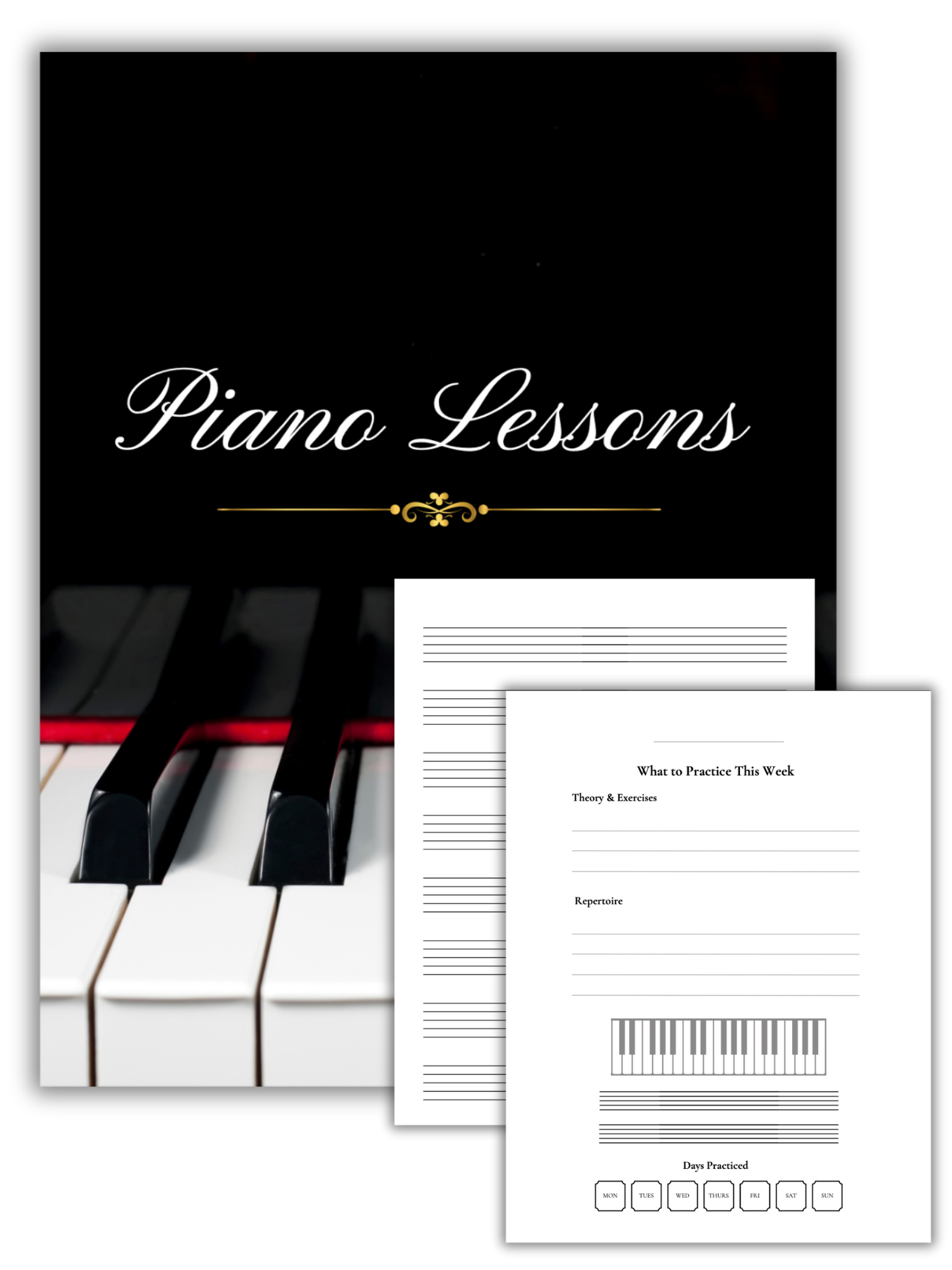
Give every student a clear, consistent record of weekly assignments, practice goals, and progress. This printable piano assignment notebook is designed to be fully customizable, so you can build a notebook that fits your teaching style and workflow. Perfect for private piano lessons, studio-wide consistency, and keeping students and parents aligned week to week.
This resource includes:
2 cover design options
“This Book Belongs To” page
Assignment Sheet - keyboard and staff
Assignment Sheet – no keyboard or staff
Large staff paper
Medium staff paper
Each page is provided as a single, print-ready PDF so you can duplicate, combine, and assemble exactly the number of pages you need before printing and binding.
🖥️ Instant PDF download — 7 pages. No physical book will be shipped.
Our Piano Assignment Notebook is a printable, customizable assignment notebook for private piano lessons. It includes:
Two cover designs
A "This Book Belongs To" page
An assignment sheet with a keyboard and staff
An assignment sheet without a keyboard or staff
Large and medium staff paper
Each page is a print-ready PDF, so you can duplicate and combine pages to build a notebook that fits your teaching. Print the version with the keyboard and staff for younger students, and the simpler version for older students who want more room to write.
Assignments That Carry Through the Week
The best assignment sheet is the one a student opens on Tuesday and knows exactly what to do. Be specific, keep it focused and keep it all in one place, and practice stops depending on what the student happens to remember.
Looking for more teaching resources? See our guide to teaching students to read music on the staff.