
The Complete Guide to Magnetic Music Notes for Piano Teachers
A deep dive into why hands-on notation tools improve reading, rhythm, and theory.
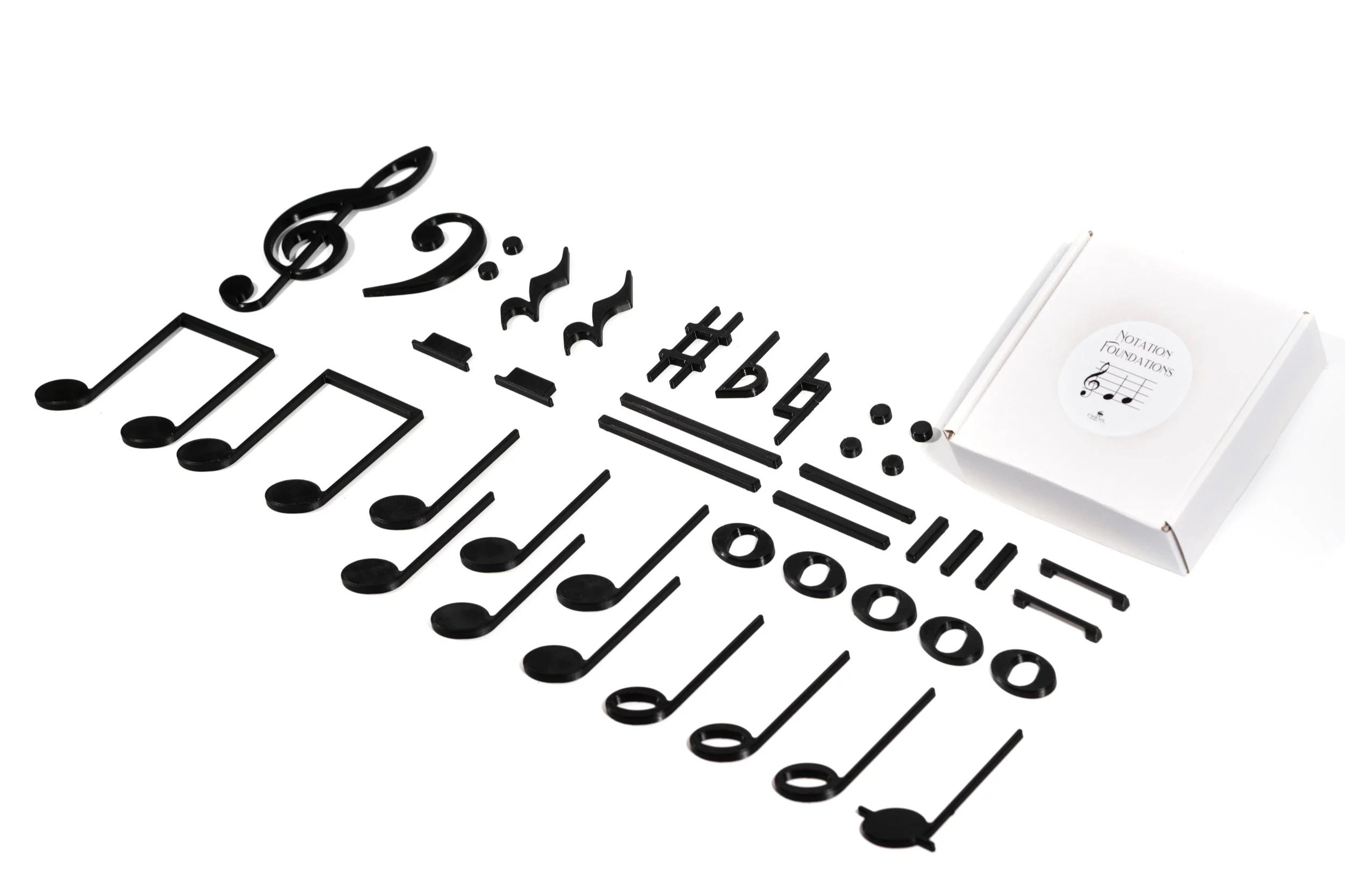
Magnetic music notes are movable, reusable notation symbols used on a magnetic staff or whiteboard to teach music reading through spatial, directional, and pattern-based understanding rather than memorization.
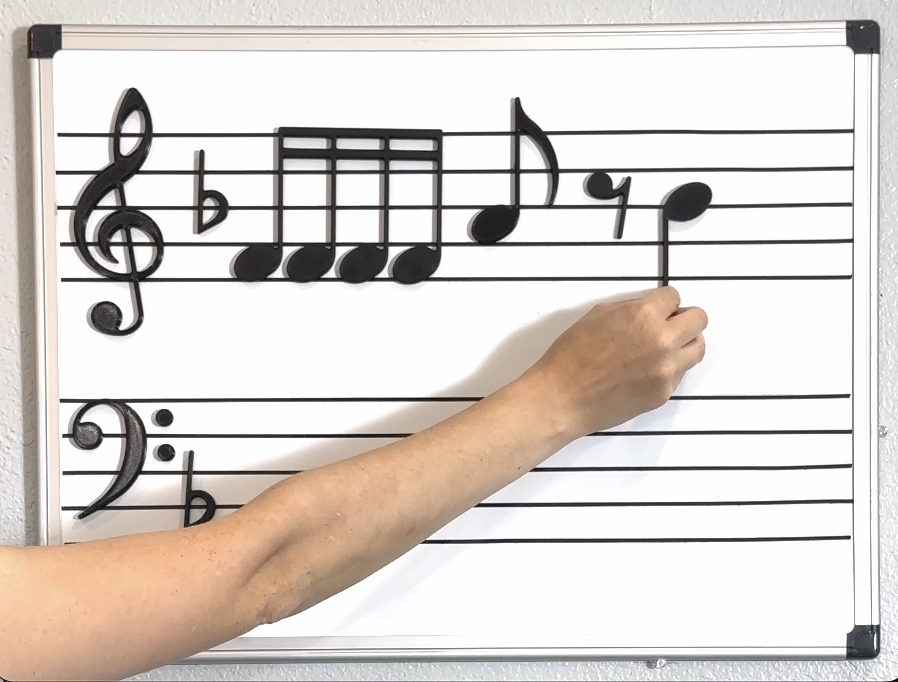
Piano teachers use magnetic music notes to help students understand staff placement, melodic direction, rhythm, and harmony by physically manipulating notation on the staff.
This guide covers why hands-on notation is more effective than traditional methods, how teachers use magnetic music notes in weekly lessons, and what to look for when choosing a high-quality set.
What Are Magnetic Music Notes?
Magnetic music notes are hands-on teaching manipulatives that allow students to build, move, and adjust notation directly on the staff to understand how music is structured.
Teachers use magnetic music notes to teach:
staff placement
intervals and melodic direction
rhythms and counting
chords and harmonic spacing
key signatures and accidentals
melodic and harmonic patterns
composition and improvisation
Hands-on learning reduces cognitive load, accelerates comprehension, and increases engagement. But the impact depends entirely on the quality and completeness of the magnetic system you choose.

Why Hands-On Notation Helps Students Learn Faster Than Worksheets
Traditional worksheets ask students to identify notes, not to understand them. Digital apps test recall, but rarely build conceptual knowledge. Hands-on manipulatives shift the student into an active learning role.
1. Students learn staff placement and intervals faster
Placing symbols on a staff gives students instant visual understanding of:
spacing
interval structure
landmark notes
directional reading
This makes reading “click” much sooner than with passive drills.
2. Notation becomes concrete, not abstract
With tactile pieces, students can build, adjust, and experiment. They see patterns, not isolated notes. This bridges the gap between “knowing the answer” and truly understanding the musical structure.
3. Mistakes become teachable moments
When a student places a note incorrectly, you can adjust it on the spot, creating immediate feedback. There's no waiting for worksheet review or app feedback.
Key Music Reading Concepts Magnetic Music Notes Support
Stepwise motion: Movement between adjacent notes on the staff that helps students understand melodic direction and spacing rather than individual note names.
Directional reading: The ability to track whether music moves up, down, or repeats on the staff, which is foundational for fluent sight reading.
Staff orientation: Understanding how notes relate spatially on the staff instead of relying on letter-name memorization.
Intervallic reading: Reading music by recognizing the distance between notes rather than identifying notes one at a time.
The Benefits of Magnetic Music Notes in a Piano Studio
Piano teachers who add tactile manipulatives typically report:
faster note-reading progress
shorter explanation time during lessons
higher engagement and retention
more productive practice at home
stronger weekly consistency
easier group-class teaching
Because the pieces make abstract concepts visible, they save teachers from long verbal explanations — a huge advantage in short lessons.
How Piano Teachers Use Sound Shapes in Weekly Lessons
Sound Shapes is used across nearly every type of lesson format:
demonstrating directional reading
teaching ledger lines without memorization
building and identifying intervals
rhythm dictation and rhythm challenges
chord shapes and chord-building
composing and arranging
creating and reviewing key signatures
group-class games and challenges
quick warm-ups, games, and exercises
Many teachers find that students who struggle with traditional reading methods make immediate progress once they begin manipulating notation with their hands.
If you want a step-by-step breakdown of how to introduce notation on the staff, see How To Teach Piano Students To Read Music On The Staff.
Digital Tools vs Hands-On Manipulatives: Do Teachers Need Both?
Digital apps support drill and speed, but they rarely build conceptual understanding. They test recall more than they teach structure.
Hands-on tools build:
kinesthetic learning
visual clarity
pattern recognition
intentional processing
deeper comprehension
The strongest studios use both:
apps for speed practice
manipulatives for deep understanding and reading strategies
Why Magnetic Notes Outperform Flashcards
Flashcards isolate notes; real reading requires interpreting patterns, not single letters.
Magnetic manipulatives let teachers teach:
contour and direction
intervallic relationships
harmonic spacing
This prepares students for actual sheet music — not one-note-at-a-time drills.
What Makes a High-Quality Magnetic Music Note Set?
Many inexpensive sets fall short because they are:
printed on thin paper
laminated and prone to peeling
cut into small cards
designed for general music, not piano
limited to treble clef or beginner symbols
A piano-specific system should include:
Durable, tactile pieces
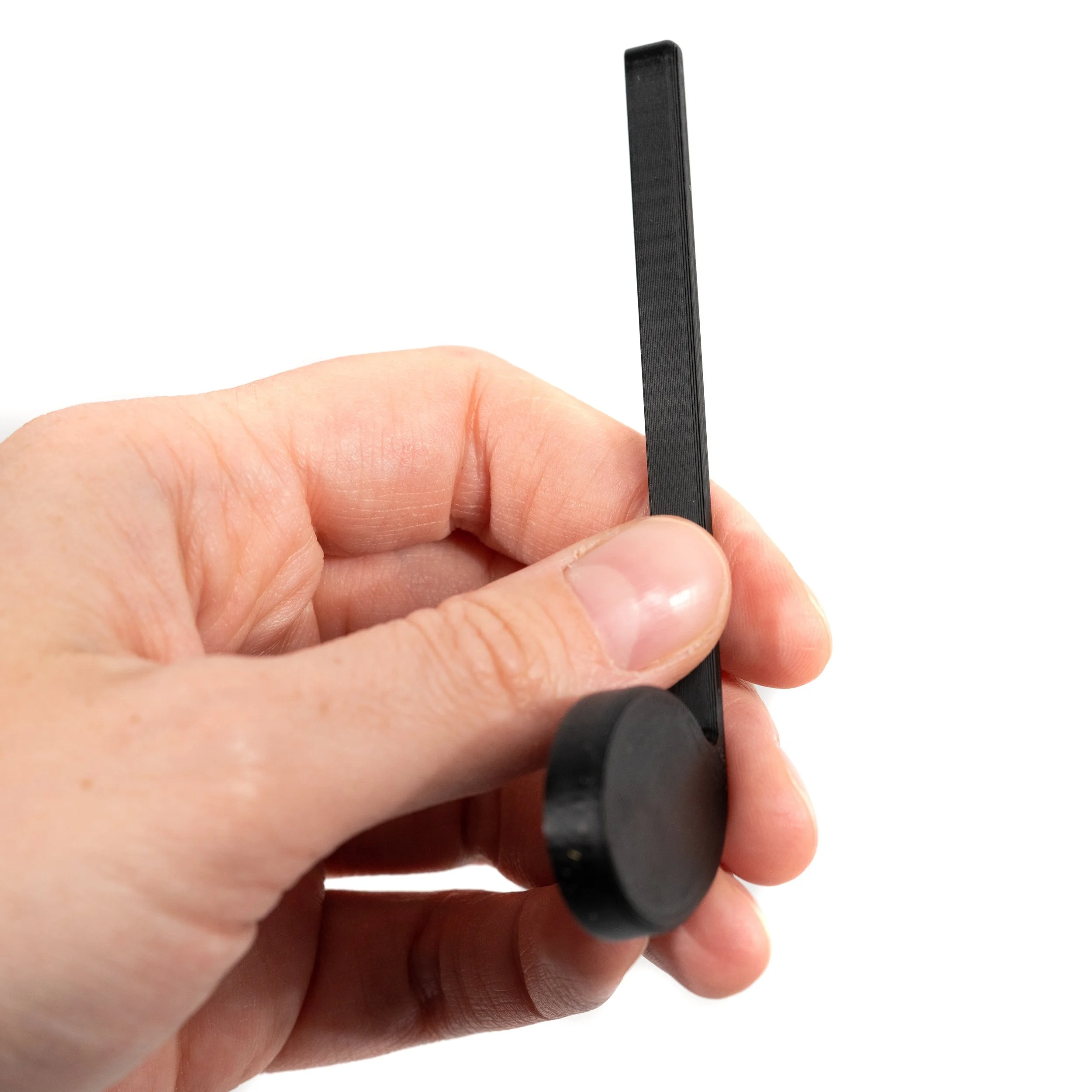
Pieces should feel substantial, not flimsy. High-quality systems use solid pieces with smooth, flush magnetic backing for long-term use.
Accurate, legible notation
Stylized or decorative symbols confuse students. Sound Shapes uses crisp, professional notation aligned with modern sheet music.
A complete symbol library
To teach beyond basic note names, a system must include symbols for:
accidentals
advanced rhythm values
chords and inversions
rests
ledger lines
beams to create different combinations of note values
Sound Shapes includes everything needed for beginner to advanced theory, harmony, and rhythm training.
Scalability for older students
Piano teachers teach 4-year-olds and 40-year-olds. The clean aesthetic makes Sound Shapes workable for every age and level.
Classroom-friendly size
Larger magnets increase clarity, reduce clutter, and improve visibility in groups.
How to Choose the Best Magnetic Music Note Set for Your Studio
Use these questions when evaluating any magnetic system:
Does it include symbols for all levels, not just beginners?
Are the pieces durable, tactile, and non-flimsy?
Can it teach rhythm, intervals, chords, and notation — or only pitch naming?
Will it grow with students through multiple years?
Is the notation accurate and aligned with real sheet music?
High-quality sets pay for themselves quickly by replacing:
worksheets
flashcards
theory drills
note-naming apps
laminated DIY materials
For a deeper look at how magnetic notes function and the different types available, read Magnetic Music Notes Explained: What They Are, How They Work & How To Choose The Right Set.
Why Sound Shapes Outperform Entry-Level Magnetic Systems
Unlike basic kits, Sound Shapes is designed for longevity and studio-wide progression. Teachers consistently report:
Clearer lessons
Faster student progress
Reduced lesson prep time
More confident note readers
More effective group classes
The clean, professional design also appeals to older beginners, teens, and adults. Sound Shapes is the system you don’t outgrow.
Frequently Asked Questions
-
Yes—especially for visual and kinesthetic learners. They eliminate confusion and build confidence immediately.
-
Definitely. The simple, professional aesthetic fits older students just as well as beginners.
-
Any magnetic surface with staff lines spaced 1 inch apart.

Which Sound Shapes Sets Do You Need? A Complete Breakdown
1. Notation Foundations
The essential starting point. Includes core notes, rests, accidentals, clefs, and symbols needed for early through intermediate reading.
Best for: all beginners, transfer students, daily lesson demonstrations.
2. Magnetic Staff White Board
A durable 18x24 magnetic board sized perfectly for teaching.
Best for: every studio; this is your teaching anchor.
3. Rhythm Suite
A comprehensive rhythm set with beamed eighths and sixteenths in multiple variations, plus all standard rhythm values.
Best for: intermediate to advanced rhythm work, dictation, group classes.
4. Intervals
Designed for harmonic interval identification — crucial for fluent sight reading.
Best for: beginner through intermediate pianists and theory classes.
5. Chords
A full set of triads, seventh chords, and more for harmony, arranging, and lead-sheet study.
Best for: intermediate and advanced pianists.
6. Accidental Ensemble
Sharps, flats, naturals, and double-sharps for key signature fluency and advanced notation.
Best for: intermediate reading and theory work.
7. Clefs
Treble and bass clefs for staff orientation.
Best for: use with all other Sound Shapes sets.
8. Leggiero
A streamlined essentials set featuring the same full-size pieces — perfect for quick drills, travel teachers, or homeschool setups.
Best for: teachers needing a simplified teaching toolkit.
Where to Buy Sound Shapes
Explore the full collection of Sound Shapes sets, bundles, and teaching boards here:
Final Thoughts: The Most Complete Magnetic Teaching System for Piano Studios
Magnetic music notes can transform how students learn, but only when they’re built for real teaching, not just basic note naming.
Sound Shapes gives piano teachers a professional, durable, and endlessly flexible system that supports learning from the first lesson through advanced reading and theory.
If you're ready to streamline your lessons, strengthen student reading, and teach with a tool that grows with your studio, Sound Shapes is the system built for you.
Last updated January 13, 2026.